
A running shoe store gait analysis identifies your foot strike and pronation style to help you select the most supportive footwear for your daily runs. While store assessments focus on product matching, clinical evaluations use advanced biomechanics to diagnose injury causes and optimize long term athletic performance.
Buying a new pair of running shoes should feel like progress, yet many athletes find themselves sidelined by recurring injuries despite a professional store fitting. You likely stepped on a treadmill for thirty seconds, watched a slow motion video of your ankles, and left with a stability shoe designed to fix your overpronation. While this retail gait analysis provides a baseline for comfort, it often misses the underlying biomechanical drivers of your pain. A true clinical assessment examines the entire kinetic chain, from hip stability to terminal knee extension, rather than just the foot strike. In this guide, we break down the fundamental differences between shoe store screenings and clinical evaluations. You will learn why your arch shape is only a small part of the equation, how NYC concrete demands more from your mechanics, and exactly when you need a medical expert to analyze your stride.
The Purpose of a Running Shoe Store Gait Analysis
Walking into a local running shop in Manhattan often starts with a request for a running shoe store gait analysis. The primary objective of this service is retail matching. Store staff aim to categorize your foot into one of three specific buckets: neutral, stability, or motion control. This process typically involves a "wet test" to check static arch height or a brief treadmill jog lasting less than ten minutes.
During this observation, a staff member watches from behind to see if your ankles roll inward (pronation) or outward (supination). While modern shops might use a tablet to record a slow-motion clip, the focus remains almost entirely on the ankle and foot. It is a helpful, free starting point for beginners who simply need a comfortable pair of shoes to avoid immediate blisters or hotspots while navigating the Central Park loop.
However, it is important to recognize the limitations. A retail analysis is a sales tool designed to help you select a product, not a diagnostic tool to identify the root cause of pain. Because the evaluation is limited to the lower leg, it misses the complex chain of events happening at the hips, pelvis, and core. For runners seeking to resolve persistent issues, a more comprehensive individualized gait analysis performed by a board-certified rehab specialist is necessary to look beyond the shoe.
What Happens During a Clinical Running Gait Assessment?
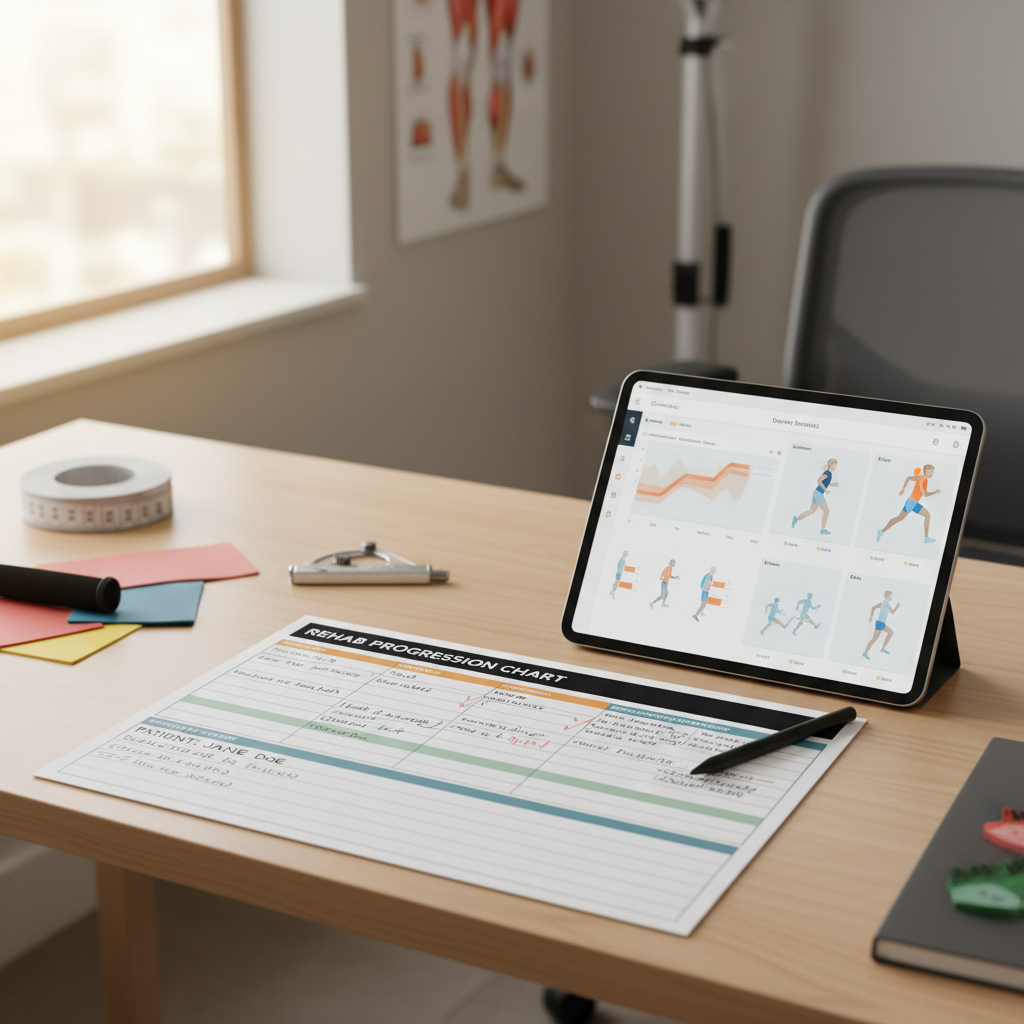
While a running shoe store gait analysis focuses on the interaction between your foot and the foam of a shoe, a clinical assessment at Running Rehab and Performance investigates the root cause of your movement patterns. The process begins before you even step on the treadmill. A board-certified rehab specialist starts by reviewing your full medical history, including past injuries that might still be causing compensatory movements during your runs on the Hudson River Greenway.
We then perform a comprehensive orthopedic screen to test strength and joint mobility. This is critical because a foot that appears to overpronate might actually be a foot attempting to compensate for a stiff ankle or a weak hip. By testing individual muscle groups and joint ranges, we identify the physical constraints that dictate your form. Standing on a static plate or jogging for thirty seconds in a retail environment cannot capture these underlying structural drivers.
Once on the treadmill, we utilize high speed video analysis from multiple angles, including posterior, anterior, and lateral views. We are not just looking at the ankle; we analyze specific biomechanical markers across the entire kinetic chain:
Pelvic Drop: Identifying if the opposite side of the pelvis dips during the stance phase, often signaling hip abductor weakness.
Knee Valgus: Watching for the knee to cave inward, which increases stress on the patellofemoral joint.
Trunk Lean: Assessing if the torso leans too far forward or backward, affecting force distribution through the spine and hips.
Vertical Oscillation: Measuring the efficiency of your center of mass movement to ensure you are not wasting energy.
This individualized gait analysis provides a high resolution map of your efficiency. Rather than simply categorizing your foot shape to sell a product, the goal is to provide a diagnostic breakdown of how your body manages load across Manhattan's varied terrain. If you are ready to move beyond basic shoe recommendations and address your specific mechanics, you can schedule a clinical assessment to begin a targeted performance plan.
Is Running Gait Analysis Worth It for Choosing Shoes?
Determining if a running shoe store gait analysis is worth it depends entirely on your objective. If your goal is to find a pair of sneakers that feel plush and avoid friction during a light jog, the retail service is highly valuable. Scientific literature often points to the "comfort filter" as a primary metric for shoe selection. This theory suggests that a runner's body naturally gravitates toward footwear that minimizes muscle work and aligns with their preferred movement path. For a healthy runner with no history of pain, a retail fitting is a practical way to ensure a shoe won't cause immediate hotspots or blisters.
However, shoe selection is rarely the cure for mechanical dysfunction. A runner experiencing persistent IT band syndrome or shin splints while logging miles in Central Park will likely find that a shoe change provides only temporary relief. In these cases, the investment in a retail analysis yields diminishing returns because the shoe is merely a buffer, not a solution. While a store might suggest a stability shoe to stop a foot from collapsing, it cannot address why that collapse is happening.
The distinction lies between comfort and biomechanical correction. A shoe store attempts to influence your movement by adding foam or plastic under the arch. In contrast, a board-certified rehab specialist uses an individualized gait analysis to determine if your foot is rotating or your heel is tilting due to proximal weaknesses the shoe cannot reach. If you are training for a race and find that every "stability" shoe still leads to the same lateral knee pain, you can schedule a clinical assessment to identify the root cause beyond the foam.
The Missing Link: Why Your Arch Shape Isn't the Whole Story

A running shoe store gait analysis typically operates on a "bottom up" logic, assuming the foot is the primary driver of all movement. If a staff member observes the arch collapsing, the standard solution is a stability shoe to prop it up. However, the foot is frequently the victim of mechanics occurring further up the kinetic chain. This introduces the "top down" perspective. For instance, if a runner has weak hip abductors, the femur may rotate internally during mid-stance. This rotation forces the lower leg to follow, resulting in a collapsed arch. In this scenario, a stability shoe acts as a temporary bandage on a hip strength deficit.
Similarly, limited ankle dorsiflexion is a common culprit for compensatory pronation. If the ankle joint lacks the necessary range to move forward over the foot, the body often "cheats" by rolling the foot inward to find a path of least resistance. For runners logging high mileage on the flat, repetitive stretches of the Hudson River Greenway, these subtle mechanical inefficiencies often manifest as repetitive strain injuries that a new pair of shoes cannot resolve. A board-certified rehab specialist uses an individualized gait analysis to distinguish between a primary foot issue and a secondary compensation. To identify the true source of your strain, you can schedule a clinical assessment and move beyond the oversimplification of arch shape.
How Much Does a Professional Running Gait Analysis Cost in NYC?
Searching for a running gait analysis cost in NYC often leads runners to Reddit threads or local forums filled with varying price points. In the Manhattan market, a comprehensive individualized gait analysis typically ranges from $250 to $600. This investment reflects the depth of technology utilized, such as high speed video software and professional grade treadmills, combined with the diagnostic expertise of a board-certified rehab specialist.
While a running shoe store gait analysis is usually offered for free, the price difference reflects the scope of the service. A retail session is a complimentary sales tool intended to lead to a footwear purchase. In contrast, a clinical assessment is an evidence based medical evaluation. It is more accurate to frame this cost as preventative maintenance. The upfront expense of a professional analysis is significantly lower than the cumulative costs of an MRI, months of injury rehabilitation, or the loss of a $255 NYC Marathon entry fee due to a preventable injury. To safeguard your training season, you can schedule a clinical assessment to ensure your biomechanics are optimized for the road ahead.
Navigating NYC Terrain: Why Your Gait Matters on Concrete and Hills
Manhattan presents a unique set of mechanical challenges that a standard running shoe store gait analysis cannot fully capture. Running the six mile loop in Central Park requires constant adaptation to rolling hills. Climbing Cat Hill demands increased hip flexion and power, while the subsequent descents require significant eccentric control to manage increased impact forces. Conversely, the long, flat stretches of the Hudson River Greenway subject the body to thousands of identical, repetitive strikes on unforgiving concrete.
These local environments demand more than just a shoe that matches a foot shape. A clinical individualized gait analysis evaluates how your body transitions between these specific demands. We examine how your mechanics hold up during the lateral movements and sudden decelerations required to navigate city traffic or tight turns on narrow paths. A brief jog on a level treadmill in a retail shop provides a snapshot of your form in a vacuum; however, it fails to account for how your glutes stabilize your pelvis when fatigue sets in on the Harlem Hill incline. By working with a board-certified rehab specialist, you learn to optimize your form for the specific pavement you run every day. To ensure your body is prepared for the unique stressors of New York City streets, you can schedule a clinical assessment today.
When Should You Choose a Clinical Assessment Over a Store Fitting?
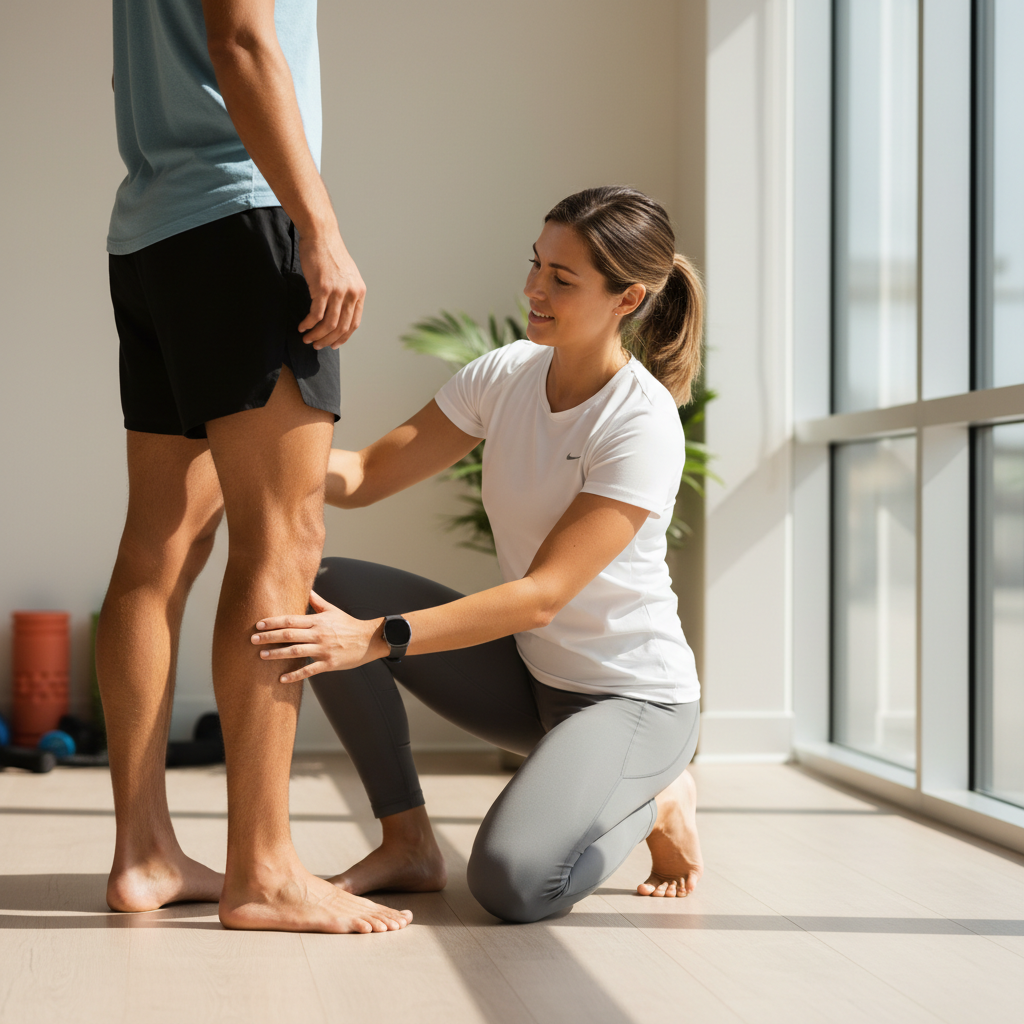
Deciding between these two paths depends on your specific goals and your physical baseline. A running shoe store gait analysis is an excellent starting point for a novice runner who is currently asymptomatic. If your primary objective is to find a cushioned trainer for short, casual jogs around the Reservoir without incurring blisters or hotspots, the retail experience offers a practical, low barrier solution for gear selection.
However, a clinical individualized gait analysis is essential if you navigate any of the following technical challenges:
Recurrent Injury History: If you have cycled through IT band syndrome, shin splints, or Achilles pain, a board-certified rehab specialist is needed to identify the mechanical failures causing the strain.
Performance Plateaus: Athletes aiming for a personal record in the NYC Marathon need to optimize cadence, stride length, and pelvic stability to find hidden efficiencies that a shoe cannot provide.
The "Fifty Mile" Failure: If your professionally fitted shoes feel uncomfortable or cause pain after the first fifty miles, the issue is likely your biomechanical load management rather than the footwear itself.
To move beyond the retail trial and error and start training with a plan built for your body, you can schedule a clinical assessment today.